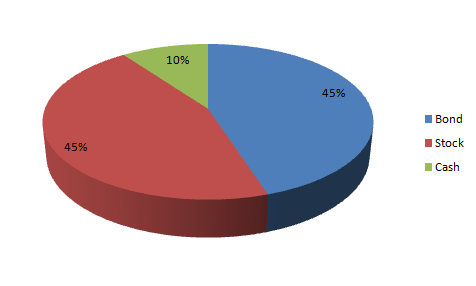
I created this page with an empty content in 2015 because back then I didn't know when I want to sell my stocks as I was holding a long term view of collecting dividends in my portfolio. Just last year, I was selling some profitable penny stocks as I decided to focus on blue chips, large cap stocks and REITs only. Well, this covid19 crisis finally made me realised what was my selling conditions but I wished it was during the bull market days. During Mar 2020, the selling from covid19 crisis was hard and fast as I watched in awe over my paper losing portfolio everyday. Then I wanted to make best use of this crisis to collect really cheap dividend stocks and so I decided to sell those stocks which were still in the green but was collecting low dividends. This move helped me raised some cash over this once in a lifetime opportunity as I channeled my fund into cheaper and higher dividend stocks. Well, that was my selling condition that time. But things were in much better shape if I sell these profitable stocks during the bull market instead.
Stay Safe, Invest Safe.
This blog records my ongoing investment activities 'buying consistently in different companies regardless of market conditions at different times' and my index futures and forex trading activities
Showing posts with label Strategy. Show all posts
Saturday, April 18, 2020
Tuesday, March 10, 2020
What Are You Waiting For?
And so our market and along with all major global stock market took a deep dive of -4.25% in STI on this faithful day 09/03/2020 Monday due to COVID19 virus and oil price crash. This kind of black swan event doesnt come everyday. I doesnt feel the pain during SARS 2003 and Lehman Bro 2008 as at that time I wasnt heavily invested. But this time round, I can feel the pinch as I see the huge paper loss that happened in just one day. But yesterday also got me excited as I see many good buys which you doesnt see it in your everyday life. Bank stocks and blue chips started to appear in the 5% to 6% dividend yield. REITs were even better as they are in the 7% to 8% range.
Investors always say that they are waiting for that opportunity to buy cheap when the price is low or when there's a bear market. But when the opportunity comes they froze in fear and didnt take action to buy. Instead they do the opposite by selling their remaining stocks at a loss.
I wrote this article to remind myself to be sure to take up this once in a few lifetime opportunity to gather up as many good dividend stocks as I can using my limited funds and CPFIS. Since Feb 2020 I was already doing some nibbling as there were some mini crashes and I am left with some 50% of my funds. I am willing to go into CPFIS when I depleted my cash funds. But this crash looks like a long haul which will last for months just like during SARS which last about 6 months.
If you need some motivation maybe you can get it from the late Uncle Chua. At that time there wasnt any internet so Uncle Chua track his stocks price via newspaper. And so when is the time to buy? Uncle Chua said that when you can see those news headline that stock markets had crashed and thats the time to buy :)
If you are wondering whether should you buy now or buy later when the price gets lower. Maybe you can find your answer here in one of my older article.
Investors always say that they are waiting for that opportunity to buy cheap when the price is low or when there's a bear market. But when the opportunity comes they froze in fear and didnt take action to buy. Instead they do the opposite by selling their remaining stocks at a loss.
I wrote this article to remind myself to be sure to take up this once in a few lifetime opportunity to gather up as many good dividend stocks as I can using my limited funds and CPFIS. Since Feb 2020 I was already doing some nibbling as there were some mini crashes and I am left with some 50% of my funds. I am willing to go into CPFIS when I depleted my cash funds. But this crash looks like a long haul which will last for months just like during SARS which last about 6 months.
If you need some motivation maybe you can get it from the late Uncle Chua. At that time there wasnt any internet so Uncle Chua track his stocks price via newspaper. And so when is the time to buy? Uncle Chua said that when you can see those news headline that stock markets had crashed and thats the time to buy :)
If you are wondering whether should you buy now or buy later when the price gets lower. Maybe you can find your answer here in one of my older article.
Monday, December 14, 2015
Successful Investors Have No Regrets
VS
I chanced upon an article or book (cant remembered which one) titled 'Successful people have no regrets'. Though I didnt read the article but I sort of agree with this statement.
Let me give you an example, during time like this when market was weakened due to potential Fed's rate hike and China stock market crash or any other reasons. It's a good time to buy the market right? Some people will be procrastinating as to 'when' is the good time or best time to buy stocks?
They are worried that if they buy too early, the stock prices could dive deeper due to more incoming bad business news. They want to avoid this and want to sit out and wait for the best time to buy. But what happens if they wait for too long and the stock market suddenly perform a V shaped recovery and they missed the boat? Well, there isnt any best time to buy.
So, when is the best time to buy? The lowest point of the dip and just before the stock market recovers? Well, I am afraid nobody knows when it will be the lowest point till it happens! ie the market recovers and stock analyst will say 'There! thats the lowest point' when its already happened and thats in the past, gone, opportunity lost!
Many a times, you will hear someone with full of regrets and say things like 'Aiya! I missed the boat! The market recovered and I thought its going to drop further!' or you rather be a successful investor with no regrets who will stroke on his chest and say 'Heng ah! Luckily I nibbled and bought some shares when the price was low'
Though I dont considered myself to be a successful investor yet, still learning to be one :)
I gathered that to become a successful investor with no regrets, you buy bit by bit and space out your buys. Some average down when their stock prices fall by a certain margin, others buy consistently across different time frame eg monthly. That way, you will buy some shares when the price is low. Of course, it may not be the 'best' price but at least you bought your targeted stocks during bearish market opportunities like this.
This is just one solution to at least buy bits of shares when market is down and next time when the market recovers, you will be patting yourself on your shoulder and uttered silently that you have done a great job :)
This downturn, I am going to take advantage of this opportunity and definitely not going to be the one who say 'Sh*t! I missed the boat!'
Friday, May 8, 2015
The Doubling Effect
This was an advertisement captured from Business Times. I thought it was a very good illustration of the magic of compounding interest at work using different asset vehicle.
Looking at the table above, FD will take 72 years to double at 1% interest OMG!
It looks like most of us should be able to target about 6% to 7% of return by investing in blue chips or ETFs so that our investment can doubled every 12 years.
If you want higher returns, you have to look out for hidden gems or value stocks. These are normally not under the big boys radar.
Another alternative is if you are a hardcore contrarian buying big time during global economic crisis just like the 2008 Great Financial Crisis (GFC) due to the collapse of Lehman Bro, you should be able to get 10% to 12% of return therefore doubling your investment every 6 years! However, these GFC do not happened often (touch wood!) do take advantage of it when it happens!
Looking at the table above, FD will take 72 years to double at 1% interest OMG!
It looks like most of us should be able to target about 6% to 7% of return by investing in blue chips or ETFs so that our investment can doubled every 12 years.
If you want higher returns, you have to look out for hidden gems or value stocks. These are normally not under the big boys radar.
Another alternative is if you are a hardcore contrarian buying big time during global economic crisis just like the 2008 Great Financial Crisis (GFC) due to the collapse of Lehman Bro, you should be able to get 10% to 12% of return therefore doubling your investment every 6 years! However, these GFC do not happened often (touch wood!) do take advantage of it when it happens!
Saturday, April 18, 2015
How To Maximise Your Active Income
We all started it somehow or rather like this. Finished our studies and finding a good job (Becoming an Employee). This is when we started earning our first paycheck and saving up our excess after our expenses. Since we need to start earning money and saving money so that we can invest the rest (Passive Income). Performing at our job (Active Income) became an important factor how fast we can achieve our financial freedom.
When I started working, I already had a plan in mind. For my first 5 to 10 years, I am going to work at private sector to gain experience, and see how far I can go. After that, with my experience, I will settle for a stable job in the govt sector. Well, I did execute my plan years ago with moderate results.
Let us discuss the traits/characteristics you need on how to help you perform in your job so that you can stay in your job longer (yes, survival skills! Its a jungle out there!), get a higher income or promotion and invest your excess income. We will not go into specific jobs as everyone of us may hold different jobs. We will just touch on the general traits. These are just what are my feel I gathered from friends, colleagues while working as an employee. Feel free to discuss below.
Rating (*=least important, **=moderately important, *** = most important)
If we can just be like playing a role playing game where you can build our own character by allocating points to our desired attributes, I would do it this way:
Total 20 points for distribution (max 3 points, min 1 point)
So how do you want to build your character?
When I started working, I already had a plan in mind. For my first 5 to 10 years, I am going to work at private sector to gain experience, and see how far I can go. After that, with my experience, I will settle for a stable job in the govt sector. Well, I did execute my plan years ago with moderate results.
Let us discuss the traits/characteristics you need on how to help you perform in your job so that you can stay in your job longer (yes, survival skills! Its a jungle out there!), get a higher income or promotion and invest your excess income. We will not go into specific jobs as everyone of us may hold different jobs. We will just touch on the general traits. These are just what are my feel I gathered from friends, colleagues while working as an employee. Feel free to discuss below.
Rating (*=least important, **=moderately important, *** = most important)
| Traits | Private Sector | Govt Sector | Verdict |
| Work Performance - determine how well you do in your job | ** | ** | ** 2 star rating for both sectors: When I started work, I used to think that work performance is the way to go and the best way to differentiate me from the rest. I was dead right. This was what my boss told me recently 'Everyone has assignments or projects just like you or me, what makes us different from the rest is those tasks or things we do outside work'. Thats right, the CCAs. Eg, involve in committee work, organise games for department, volunteers for charity work etc. That leads to another very important trait which we will discuss later - profile. |
| 'Tahanbility' - your ability to 'tahan' or endure the sh*t | *** | *** | *** 3 star rating for both sectors: No matter where you go, you just need to have the 'omph' in you just like the rabbit toy playing the drum in the Durecell advertisment. The going will get tough and you will need to endure the sh*t. Its not easy cause sometimes you are down and not motivated but tell yourself you will be a whole lot better person when you pull through it. There's no such thing as a stress-free job even the auntie cashier at McDonald is also under tremendous stress and their pay is just $4 per hour. I once witnessed Mcdonald customers scolding a auntie when she was slow, probably new at her work. Wah people old liao just close 1 eye and wait patiently lor. But not many Singaporeans are like me ok? ;) |
| Seniority - your number of years in the company | * | ** | * 1 star rating: At private sector, there's no preference given for your seniority in the company. However, when you are more senior of course you will have the most knowledge and experience which will help you in doing a better job. It may not be so for some people. Even though they have been in the company for the longest time but they know nuts. ** 2 star rating: I believed that in the govt sector, the HR does track individual progression. If an individual has been stuck in the position for certain years, the HR will highlight and ask the management how can they help the guy to be able to perform the next level's job. So it does seem like if you are more senior, you get to be promoted first then the other guy that came in later. |
| Salary - how much are you getting paid | ** | * | ** 2 star rating: I think its quite true that private sector pays better and have higher increment than govt sector. Just by looking at the starting pay of fresh grad, those people when they see the starting pay in the govt sector, they will walkout of the recruitment talk or tear away the recruitment brochure * 1 star rating: In govt sector, there's the abominable salary ceiling. If you hit the ceiling and not promoted to the next level, you will not get any increment for as long as you are not promoted. And what are we talking about 4% inflation when you got 0% increment. |
| Motivation - get your mojo going | ** | ** | ** 2 star rating for both sectors: You just need to get your engine going and get motivated. Its not easy because you are going to work for the rest of your life or at least until you retire. 30? 40 years of work? I still remember one of my teacher who told the whole class that if anyone of us need to repeat for a year to get a better result. Just do it. What is 1 year compared to the many years of working life? Some get motivated by their faith, money, career, some just get motivated because of their family to provide them a better and comfortable life. Go and find your motivation. You are going to need it. |
| Job Security - determine how secured or how long you can stay in your job | * | *** | * 1 star rating: At the private sector especially MNCs, its very real. When company is not doing well or when there's an economic crisis. The angmo bosses will not hesitate to cut headcounts especially if the head office in USA or Europe gave orders to cut headcounts in Asia. They will do it to reduce costs. Or sometimes managers or staff are not performing up to expectation, they will be given warning and monitoring period. If no improvement which usually is the case, they will sack the fellow. I have seen managers getting the sack with no advance notice. They are told to leave the next day. No handover or no time for you to say goodbye, too malu to say goodbye too. They just disappear or disintegrate into thin air. *** 3 star rating: At the govt sector, there's no worries during recession. Yes, we do get our pay freeze or pay cut but there's no fear that you will lose your job. This also means that during recession when every stocks or property is at great discount, you can just buy them and have no fear that you will have no money to pay for them. For those poor performers or 'deadwood', I think its a lot more lenient here. The most they will be blacklisted or no performance bonus but they still get to keep their jobs. |
| Profile - determine how exposed, famous, vocal you are in the company | *** | *** | *** 3 star rating for both sectors: This is what I feel one of the most important factor no matter where you are. You got to make yourself high profile, visible, high exposure. Just like an actor or actress, you need to be exposed to as many drama, magazine, airtime, advertisement, variety show, interview, etc as much as possible. You don't want the people to ask who is this guy?? If you are an introvert, you got to step out of it. Be a social butterfly. Be friendly and small talk with people. Leave a good impression. If you are really those 'thick skinned' type, better still, chat or build network with your bosses' boss, management people. This is not easy for some people as they are not comfortable with it. However, some people seems like a natural. Try not to overdo it and do it with style. If not, your colleagues will think you are degrading, cheap slut. Its an art, not a science. |
| Office Politics - determine the dirty games and hidden agenda | *** | * | *** 3 star rating for private sector: The office politics in private sector is worst than govt sector. Mainly because some people have little things to do, they are not so occupied so they started playing games with others. Its especially worst at management level. Also job security is also not there, so people resort to dirty tricks to win their competitors. Much like a survival series. You have people smiling at you and then they complain about you, back stabbing, make things difficult for you so that you perform poorly, all sorts of things. * 1 star rating for govt sector: Over here, politics are lesser but not completely nil. Most people goes around doing their things. They usually don't bother about you. Mainly because in govt sector most people just want to earn a living and not so competitive as in private sector as they are fighting for their rice bowls and promotion. Govt sector also have lots of documentation, duties, work to do. So everyone is kept busy, no time for politics haha |
| Boss orientation - determine how you 'tripod' or suck up your boss | *** | *** | *** 3 star rating for both sector: This is an important trait, be boss oriented, do what he/she wants. Learn her pattern or style and do it in such a flavour that she will love it. Be like her. If she is hardworking, mimick her If she is a sociable person, try to be like her. Boss normally like someone who are just like themselves. |
| Education - determine your paper qualification | ** | *** | ** 2 star rating: Better education at private sector probably will give you a good headstart but most of the time they will accept you based on your experience, some recommendation from your friends and how well you perform at interview. If you are in your job and have just completed a tertiary education, sometimes they just gave you a commendation letter to congratulate you. There's no promotion as it is based on work performance. *** 3 star rating: Govt sector's recruitment main criteria is education. They have very strict job segregation eg Junior and Senior Officers. Junior officers are those diploma and below. Senior officers are those with degree. If you are a junior officer, matter how well you perform without that degree, you will always be a Junior Officer. This is very frustrating for them as some of them I have seen have been in the department for many years and their new bosses knew nuts about the businesses. But they are always stuck in their job. However, I have seen Junior Officer getting their promotion to Senior Officer when they completed their degree course. Work performance just need to be average its enough. I have also seen my fair share of scholars in SAF and govt sector getting promoted real fast. Their career path had been planned out for them. They just need to complete their cycle of duties and *BOOMZ* they will be promoted to the next level. So the morale of the story: Study hard when you are a student :) See now you know why your parents keep telling you to study hard when you have the chance? Now I have been telling my daughters to study hard too. When they get older hopefully I can tell them about all these. If not, I hope they will find my blog and learn from my experience :) Note: Best investment is to invest in yourself |
If we can just be like playing a role playing game where you can build our own character by allocating points to our desired attributes, I would do it this way:
Total 20 points for distribution (max 3 points, min 1 point)
| Traits | Private Sector | Govt Sector | Points |
| Work Performance - determine how well you do in your job | ** | ** | 2 |
| 'Tahanbility' - your ability to 'tahan' or endure the sh*t | *** | *** | 3 |
| Seniority - your number of years in the company | * | ** | 1 |
| Salary - how much are you getting paid | ** | * | 1 |
| Motivation - get your mojo going | ** | ** | 1 |
| Job Security - determine how secured or how long you can stay in your job | * | *** | 2 |
| Profile - determine how exposed, famous, vocal you are in the company | *** | *** | 3 |
| Office Politics - determine the dirty games and hidden agenda | *** | * | 1 |
| Boss orientation - determine how you 'tripod' or suck up your boss | *** | *** | 3 |
| Education - determine your paper qualification | ** | *** | 3 |
| Total | 20 |
So how do you want to build your character?
Friday, February 6, 2015
Mitigate Risk By Diversification
Putting our hard earned money in the stock market is a risky business. We may have put in our best research effort to ensure that all the financial, valuation and management factors are tip-top but there will be some hidden or external factors which investors do not know. We all do not want to see our portfolio lose money. It's risky to invest in stock market. We cannot eliminate risk but we can reduce our risk. So what do we do? We buy more individual stocks :) Study has shown that as we diverisified by buying into different stocks, our portfolio risk reduces. So when a particular sector or single stock is not doing well, it will not have a big impact on your portfolio as a whole. However, when there's a systematic risk of a global crisis eg the Great Financial Crisis in 2008, every stocks in the stock market will fall. That will affect your portfolio too.
The following will be what I will be doing.
Stock Diversification
Keep to the 5% rule. Try not to have more than 5% of the individual stocks in your portfolio. So that any bad things happening to your single stock is only 5% of your overall portfolio. It will not caused a dent in your portfolio. In order to get the magic 5% figure, you need to invest at least 20 different stocks so that they will make up 100% of your portfolio. Basically, I will be trying to build my own ETF with 30 to 40 stocks for a start.
Sector Diversification
Currently we have oil price dropping from US$100+ to below US$50, this has caused O&M related stocks such as Keppel Corp, Sembcorp, CH Offshore, etc tumbling down as much as 27%. Do be careful not to keep picking up these stocks from the same sector and over exposed yourself to the O&M sector. Keep to the 20% for each sector.
Geographic Diversification
We are lucky to be in Singapore while it strived to be a financial hub, there are lots of companies listed in SGX with foreign investments such as Saizen REIT (Japan), Mapletree Greater China REIT(China), Hutchison Port Trust(HK), Ausnet(Australia), etc. Many of our stocks in SGX have investments in different countries such as Hong Kong, China, Japan, Indonesia, US and Malaysia. These are the countries which most of the SGX stocks are vested. It's about 15% in each countries so pretty much diversified already. At this moment, I am concentrating on building my portfolio buying local stocks in SGX. In the future, I may want to buy stocks from US or Hong Kong to spread out my geographical risk. However, it seems quite expensive to buy foreign stocks as we need to pay extra handling fees for our overseas dividends which I do not find it worthwhile. I may be considering buying high dividend ETFs which consists of a list of 30 to 40 dividend stocks. Any good idea on buying foreign stocks please share :)
Asset Diversification
Just now we mentioned about global stock market crisis, so how do we reduce our risk when that happens? We diversify our assets namely stocks and bonds. I am treating my CPF savings as bonds currently earning 2.5% and 4%. If you have read my profile, you would have known that I have maximised my SA savings so I have a pretty build-up bond asset in my portfolio. In this blog, I will be focusing more on my stock asset.
The following will be what I will be doing.
Stock Diversification
Keep to the 5% rule. Try not to have more than 5% of the individual stocks in your portfolio. So that any bad things happening to your single stock is only 5% of your overall portfolio. It will not caused a dent in your portfolio. In order to get the magic 5% figure, you need to invest at least 20 different stocks so that they will make up 100% of your portfolio. Basically, I will be trying to build my own ETF with 30 to 40 stocks for a start.
Sector Diversification
Currently we have oil price dropping from US$100+ to below US$50, this has caused O&M related stocks such as Keppel Corp, Sembcorp, CH Offshore, etc tumbling down as much as 27%. Do be careful not to keep picking up these stocks from the same sector and over exposed yourself to the O&M sector. Keep to the 20% for each sector.
Geographic Diversification
We are lucky to be in Singapore while it strived to be a financial hub, there are lots of companies listed in SGX with foreign investments such as Saizen REIT (Japan), Mapletree Greater China REIT(China), Hutchison Port Trust(HK), Ausnet(Australia), etc. Many of our stocks in SGX have investments in different countries such as Hong Kong, China, Japan, Indonesia, US and Malaysia. These are the countries which most of the SGX stocks are vested. It's about 15% in each countries so pretty much diversified already. At this moment, I am concentrating on building my portfolio buying local stocks in SGX. In the future, I may want to buy stocks from US or Hong Kong to spread out my geographical risk. However, it seems quite expensive to buy foreign stocks as we need to pay extra handling fees for our overseas dividends which I do not find it worthwhile. I may be considering buying high dividend ETFs which consists of a list of 30 to 40 dividend stocks. Any good idea on buying foreign stocks please share :)
Asset Diversification
Just now we mentioned about global stock market crisis, so how do we reduce our risk when that happens? We diversify our assets namely stocks and bonds. I am treating my CPF savings as bonds currently earning 2.5% and 4%. If you have read my profile, you would have known that I have maximised my SA savings so I have a pretty build-up bond asset in my portfolio. In this blog, I will be focusing more on my stock asset.
Friday, January 2, 2015
My Strategy
In 2010, I bought 10 lots of Starhill Global at $0.50 and Suntec Reits at $1.24 for divdend but was scared of the Tsunami/Nuclear crisis in Japan 2012, so I sold all of them thinking that there will be another crisis just like the 2008 Lehman Bro crisis. But the correction was short lived, I waited for further correction but it didnt happened so I waited waited and waited.
In 2014, I waited for correction but it didnt happened. I just kept on building my warchest. I am also cautious about the current SG stock market which is running high and am afraid of any correction happening in the near future. So this time I cannot tahan anymore. I bought some Global Investment. Its my first buy since 2012, haha about 2 years ago. This time I am buying for keeps.
My Strategy:
I called it 'myCreative' to remind me of my bad move in 2008 when I bought huge amount of Creative Technology stock at sky high price $21+ when Creative was successful with its ZEN mp3 players. There was no diverisification of stocks and I put all my eggs into one basket. Its not creative at all. There was a lot of hype at that time when Creative ZEN was challenging Apple iPod. The stock at that time was highly priced and very low dividend. I add on to it and only to see this stock go lower. Now we all know the story. It is currently trading at $2.
I got my inspiration from ghchua and sanye who are constantly buying into the market now and holding on to them to collect dividend. They do have growth stock but I am going to stick to those high dividend stocks first.
In this strategy, there's no stop loss so during bad times, we have to bite the bullet and see our paper loss each day the market goes down but we shall not falter and hold on to our strategy. Try to buy different stocks each time or same stock at different time. The key is to build a diversified portfolio of high dividend stock so that we can still collect dividend during bad times and to continuously add more stocks when its cheap. In fact its going to be boring because its a buy and hold to collect dividend strategy and to be able to tahan any market correction, its going to be robust and diversified.
This is what I will do, to save up $5k of cash and invest on 1 new stock ea month (This is because of the brokerage rate of 0.28% or mini $25 imposed by broker. Not worth it if you buy 1 lot and still pay min $25). This will continue, my first target is 30 stocks. This is little as compared to ghchua and sanye as I think they hold hundreds of stocks.
In 2014, I waited for correction but it didnt happened. I just kept on building my warchest. I am also cautious about the current SG stock market which is running high and am afraid of any correction happening in the near future. So this time I cannot tahan anymore. I bought some Global Investment. Its my first buy since 2012, haha about 2 years ago. This time I am buying for keeps.
My Strategy:
I called it 'myCreative' to remind me of my bad move in 2008 when I bought huge amount of Creative Technology stock at sky high price $21+ when Creative was successful with its ZEN mp3 players. There was no diverisification of stocks and I put all my eggs into one basket. Its not creative at all. There was a lot of hype at that time when Creative ZEN was challenging Apple iPod. The stock at that time was highly priced and very low dividend. I add on to it and only to see this stock go lower. Now we all know the story. It is currently trading at $2.
I got my inspiration from ghchua and sanye who are constantly buying into the market now and holding on to them to collect dividend. They do have growth stock but I am going to stick to those high dividend stocks first.
In this strategy, there's no stop loss so during bad times, we have to bite the bullet and see our paper loss each day the market goes down but we shall not falter and hold on to our strategy. Try to buy different stocks each time or same stock at different time. The key is to build a diversified portfolio of high dividend stock so that we can still collect dividend during bad times and to continuously add more stocks when its cheap. In fact its going to be boring because its a buy and hold to collect dividend strategy and to be able to tahan any market correction, its going to be robust and diversified.
This is what I will do, to save up $5k of cash and invest on 1 new stock ea month (This is because of the brokerage rate of 0.28% or mini $25 imposed by broker. Not worth it if you buy 1 lot and still pay min $25). This will continue, my first target is 30 stocks. This is little as compared to ghchua and sanye as I think they hold hundreds of stocks.
Subscribe to:
Posts (Atom)